
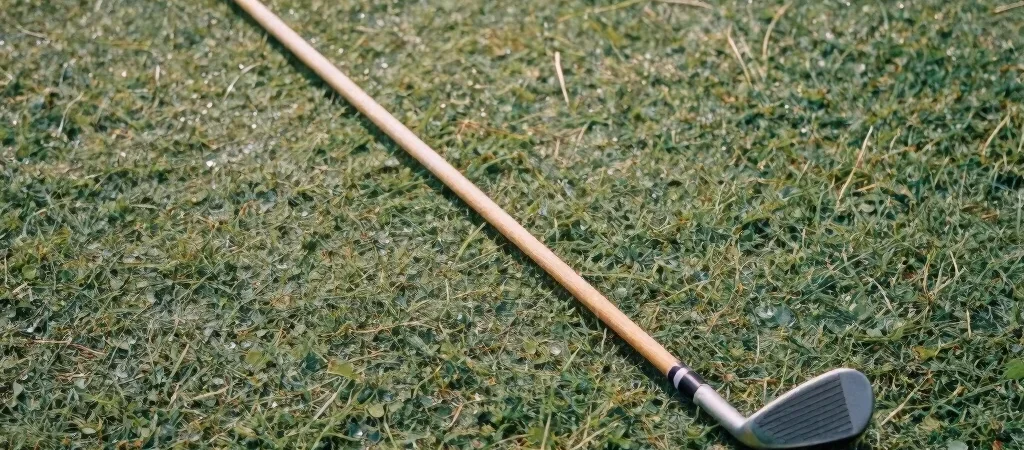
At 69, I’m starting again in one particular corner of golf: learning to play with hickory clubs. The adjustment is not just a matter of swapping one material for another; it is learning to notice how a club feels through the swing, and to leave room for that feeling to inform the next shot.
Let the club set the pace
A hickory shaft asks me to pay attention to tempo rather than trying to force a result. I’m working on making a balanced swing and letting the club move through it, instead of hurrying from the top. That is a useful note for any golfer, but with these clubs it becomes part of the day’s experiment.
I’m not treating a poor strike as proof that the club is wrong, or a good one as proof that I have it mastered. The lie, the contact and the swing all matter. For now, the honest record is what I felt, what happened to the ball and what I would try differently next time.
Read each club on its own
A set is not a collection of interchangeable old objects. Differences in head shape, shaft feel, grip and overall condition can change how a club suits me, so I want to note those details before drawing conclusions about it. A simple club report can include the lie I faced, the shot I attempted and whether the club felt comfortable to swing.
That kind of note is more useful to me than a sweeping verdict. I’m learning hickory golf as I go, and the point is to understand the particular club in my hands, not to pretend every hickory club behaves alike. One round at a time, I can build a record that is both personal and practical.