
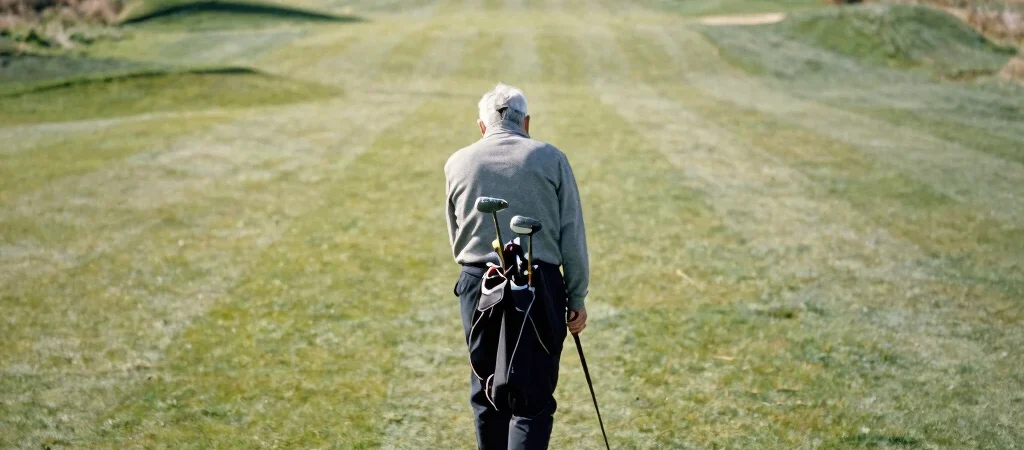
A course feels different when I’m there to play it, not just to tick it off a list. Travelling with hickory clubs makes me look closely at the ground in front of me: where a ball sits, how the fairway runs and what kind of shot the next stretch seems to invite.
Notice the ground underfoot
The scorecard tells me the hole’s length, but not how the surface will shape a round. A firm, running fairway asks a different question from a soft lie or a slope that feeds the ball away. I want to record those details alongside the club I chose, because the course and the equipment are part of the same experience.
A useful playing note need not be complicated. I can mark where I stood, what the lie allowed and whether I felt confident making the shot. Those observations help me remember a place more clearly than a score alone, especially when a later visit brings different weather or a different set of clubs.
Keep the club in the story
When I write about a course, I also want to say which hickory club was in my hands and why I reached for it. That is not a claim that I chose perfectly; it is a record of the decision I made at the time. If the shot goes as planned, that is worth noting, and so is the lesson when it does not.
The aim is not to collect destinations for their own sake. It is to learn how different ground meets the clubs I play, and to bring home details another golfer can picture: a lie on a slope, a fairway that keeps a shot moving, or a hole that rewards restraint. For the next course, I’ll make space in my notebook for those details before the final score.